Statecraftsmen · Anti-model
Samuel Zemurray
Zemurray marks the line the doctrine will not cross: once a private operator treats sovereignty as an obstacle to remove, statecraft collapses into predation.
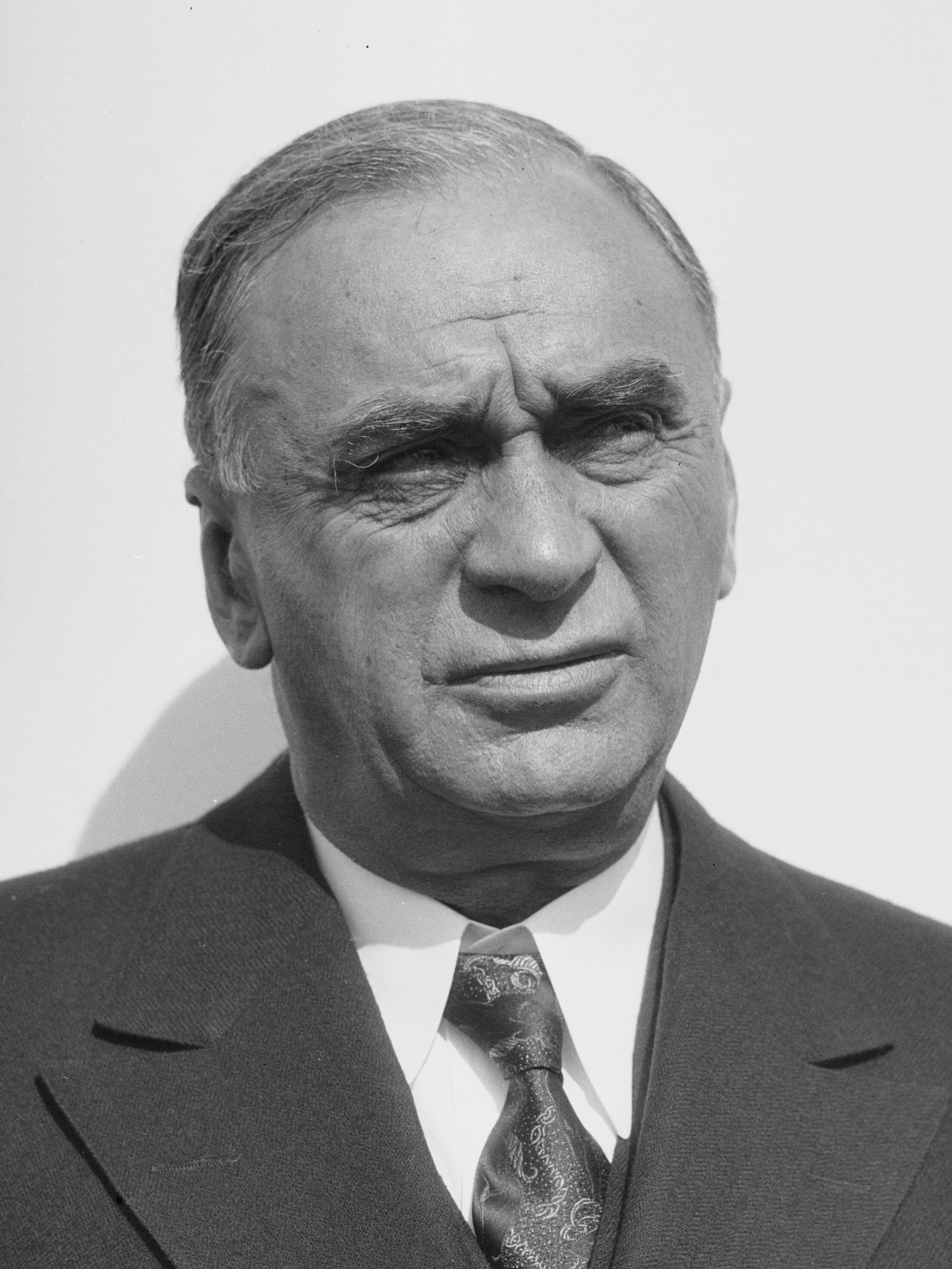
He built a real platform and then corrupted the political field around it
Zemurray was not a cartoon villain dropped into Central America from nowhere. He was an operator, which is why his case matters. After making money in the banana trade out of New Orleans, he moved aggressively into Honduras, bought land along the Cuyamel River, and built the plantations, transport links, and export machinery that became the Cuyamel Fruit Company.[1] He understood the business as a system: land without transport was worth little, plantations without ships and commercial routes were traps, and the real asset was the corridor, from inland production to coastal shipment to the American market.
The line was crossed when political risk appeared. Rather than accept Honduran sovereignty as the precondition within which enterprise had to function, Zemurray helped organize an alternative political fact. In late 1910 and 1911 he financed and backed Manuel Bonilla's return from exile, using mercenaries, arms, and the yacht Hornet to support a revolt that ended with Bonilla's restoration to the presidency in 1912.[2] Cuyamel received favorable tax and land concessions in return,[3] and Zemurray soon appears in American diplomatic records not just as a businessman with interests in Honduras but as a man involved in loans and political terms around the state itself.
Why the anti-model is in the canon at all
Zemurray belongs in the canon only as an anti-model because the structural resemblance is genuine. He joined capital, logistics, land, and cross-border commerce in a politically fragile environment. He saw the strategic value of transport-linked economic bases, and he knew that legal terms and public authority could determine whether those bases became profitable or stranded. Those are real similarities to later statecraft questions.
But the moral and institutional difference is decisive. The doctrine requires host-country consent and operating legitimacy. Zemurray treated both as dispensable if they blocked his interests. Instead of building inside a sovereign bargain, he tried to decide who the sovereign would be. Rather than asking whether American-linked enterprise could be defended as aligned with Honduran national interest, he treated the state as something to bend until it yielded the concessions he wanted. His case therefore gives the doctrine one of its cleanest negative definitions: private operators can be strategically important, but they cannot be allowed to become private makers of governments.
The analogy stays useful only when it stays exact
There is a temptation to write Zemurray as a lurid morality play and stop there. Weak public finance, concession politics, rivalry among fruit firms, and permissive American habits all formed the environment in which he acted — he did not invent the entire system by himself. But none of that softens the central judgment. His own late-life admission, "All we cared about was dividends," is disqualifying enough.[4] The analogy is useful only if it stays exact: he was capable, disciplined, and strategically shrewd, and he was willing to use force and political manipulation to secure private advantage in a sovereign country.
The doctrine is designed against the Zemurray pattern
Zemurray's place in the canon clarifies what the doctrine is engineered to avoid. Host-country consent cannot be inferred from convenience, elite side deals, or after-the-fact legal paper — it has to be affirmative, public, and durable. Political-risk protection cannot become a moral laundering device for concessions obtained by coercive politics. And operators cannot freeload on American power while undermining the sovereignty that makes allied partnership possible in the first place.
The positive principle forced by this anti-model is simple enough to state: strategic enterprise abroad must strengthen the host bargain, not hollow it out. The operator may align with American interests, but he cannot decide that a foreign government is merely another variable to optimize. When that line is crossed, the project is no longer economic statecraft. It is private predation with better shipping.
Sources
Rich Cohen, The Fish That Ate the Whale: The Life and Times of America's Banana King (Farrar, Straus and Giroux, 2012), 40–68. Cohen's account of Zemurray's early years in the New Orleans banana trade and his move into Honduras is the most accessible full-length treatment.
"Manuel Bonilla," Wikipedia, accessed 2026; Cohen, The Fish That Ate the Whale, 82–97. The Wikipedia article on Bonilla confirms the 1912 restoration date and the role of the Hornet expedition. Cohen provides the operational detail, including Lee Christmas and the mercenary force.
Walter LaFeber, Inevitable Revolutions: The United States in Central America (W. W. Norton, 1983), 44–47. LaFeber documents the concession terms Cuyamel secured following Bonilla's return and their place in the broader pattern of fruit company land and tax privileges in Honduras.
Cohen, The Fish That Ate the Whale, 212. Cohen attributes the "All we cared about was dividends" line to Zemurray's later reflection on his years in Central America.