Statecraftsmen · Model
Dwight Morrow
Morrow established the legitimacy rule: American capital abroad lasts only when the host nation believes it serves the nation's own interest.
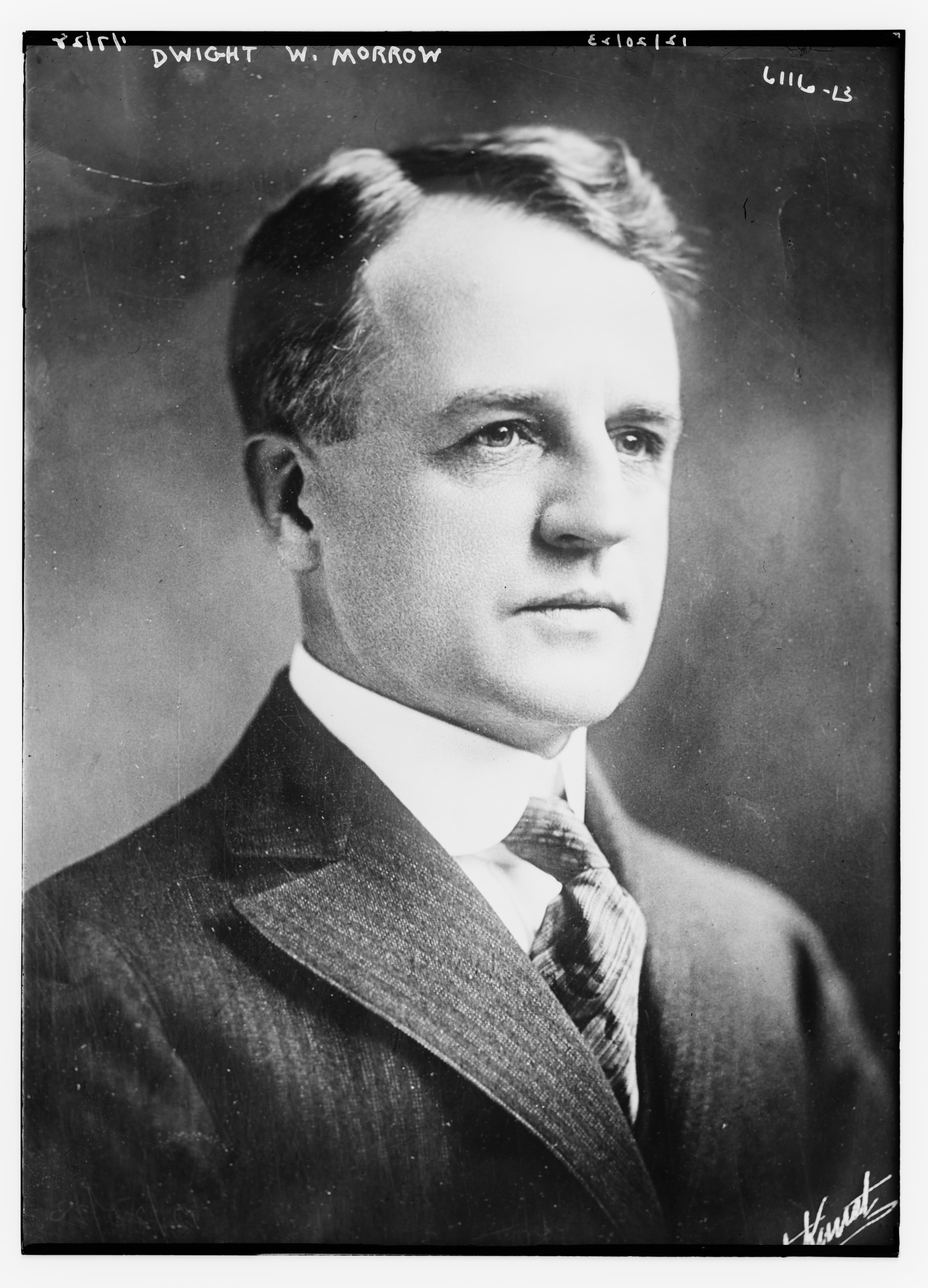
He repaired a poisoned relationship by changing the method
When Calvin Coolidge sent Morrow to Mexico in 1927, the appointment looked to many observers like a return to classic dollar diplomacy.[1] Morrow was a corporate lawyer, a Morgan partner since 1914, already associated with finance and establishment power — not a career diplomat. The bilateral relationship he inherited was raw with suspicion. The Mexican Revolution, the 1917 Constitution's Article 27, the oil controversy, anticlerical conflict, and the long memory of intervention had all made Washington's intentions hard to trust.[2] A financier arriving as ambassador seemed, on the face of it, like the wrong signal.
Morrow's achievement was to make that first impression wrong. He cultivated direct contact with President Plutarco Elías Calles, accepted repeated personal meetings and ranch breakfasts, and worked by reducing temperature rather than by escalating notes.[3] His early months in Mexico are striking for their informality: personal calls, breakfast diplomacy, a deliberate effort to clear away distrust before trying to settle issues. He helped move the relationship away from a logic of threatened force and toward negotiation, including in the church-state crisis and the wider political atmosphere surrounding American business interests in Mexico.
He supplied the doctrine's legitimacy test
Morrow does not belong in the canon because he built a jurisdiction or a transport corridor with his own capital. He belongs because he articulated the rule without which those projects fail: investment abroad cannot rely indefinitely on superior power, diplomatic bluster, or legal formality alone. It has to become intelligible to the nation receiving it. Walter Lippmann distilled the point in 1927 in the line that should remain attached to Morrow permanently: "In the last analysis the security of American investments abroad must rest, as Mr. Dwight Morrow pointed out, on the faith of the borrowing nations. They must believe that American capital profits them and is consistent with their own national interest."[4]
That sentence gives the doctrine one of its deepest constraints. Host-country consent is not a ceremonial extra added after the deal is signed; it is part of the asset itself. If investment cannot be defended by the host polity as useful to national life, the legal paper around it will eventually weaken. Morrow therefore supplies the canon's answer to the crude assumption that strategically aligned enterprise must always collapse into coercion. He joined finance, diplomacy, and restraint, and in doing so showed that legitimacy is not softness — it is the durable side of power.
The analogy has real limits
Morrow was a bridge figure, not a field operator. He entered Mexico with immense class, institutional, and political credibility already in hand, and that makes him easier to admire than to replicate. His method also relied heavily on personal rapport with Calles, which is useful but thinner than institution-building if detached from deeper architecture.[5] And however tactful he became, he still operated inside an unequal relationship in which the United States possessed more leverage than Mexico. None of that disqualifies him. It simply keeps the analogy honest. He is the canon's model of legitimacy work, not a template for pretending asymmetry does not exist.
The doctrine takes the rule and turns it into design
Morrow's lesson is simple enough to memorize and demanding enough to discipline a whole doctrine: American-linked enterprise abroad must be legible as a gain to the host nation on its own terms. That means visible local upside, legal arrangements a sovereign can defend publicly, and operators who understand that permission obtained from a narrow elite is not the same thing as durable consent.
For the doctrine, Morrow supplies both a moral principle and a strategic one: reciprocity and durability, which are ultimately the same constraint stated in two registers. Zones, industrial corridors, and private operating platforms do not become secure because Washington prefers them. They become secure when the host country can say, truthfully and without embarrassment, that the arrangement is profitable to national life. Morrow did not build the operator. He defined the test the operator must pass.
Sources
Harold Nicolson, Dwight Morrow (Harcourt, Brace, 1935), 294–301. Nicolson's authorized biography, which drew on Morrow's papers, covers the appointment and contemporary reaction to it.
Lorenzo Meyer, Mexico and the United States in the Oil Controversy, 1917–1942, trans. Muriel Vasconcelos (University of Texas Press, 1977), 93–122. Meyer documents the bilateral tension over Article 27 and oil rights that Morrow inherited.
Nicolson, Dwight Morrow, 312–324. Nicolson describes Morrow's informal diplomacy with Calles, including the ranch meetings, in detail.
Walter Lippmann, "Morrow in Mexico," Foreign Affairs 6, no. 1 (October 1927): 136–137. The cited passage is the climax of Lippmann's essay on Morrow's early months as ambassador.
Nicolson, Dwight Morrow, 335–342; John A. Britton, Revolution and Ideology: Images of the Mexican Revolution in the United States (University Press of Kentucky, 1995), 110–115.