Statecraftsmen · Model
Herbert Hoover
Hoover joined operating competence to moral argument, showing that serious builders need a governing philosophy and not just commercial nerve.
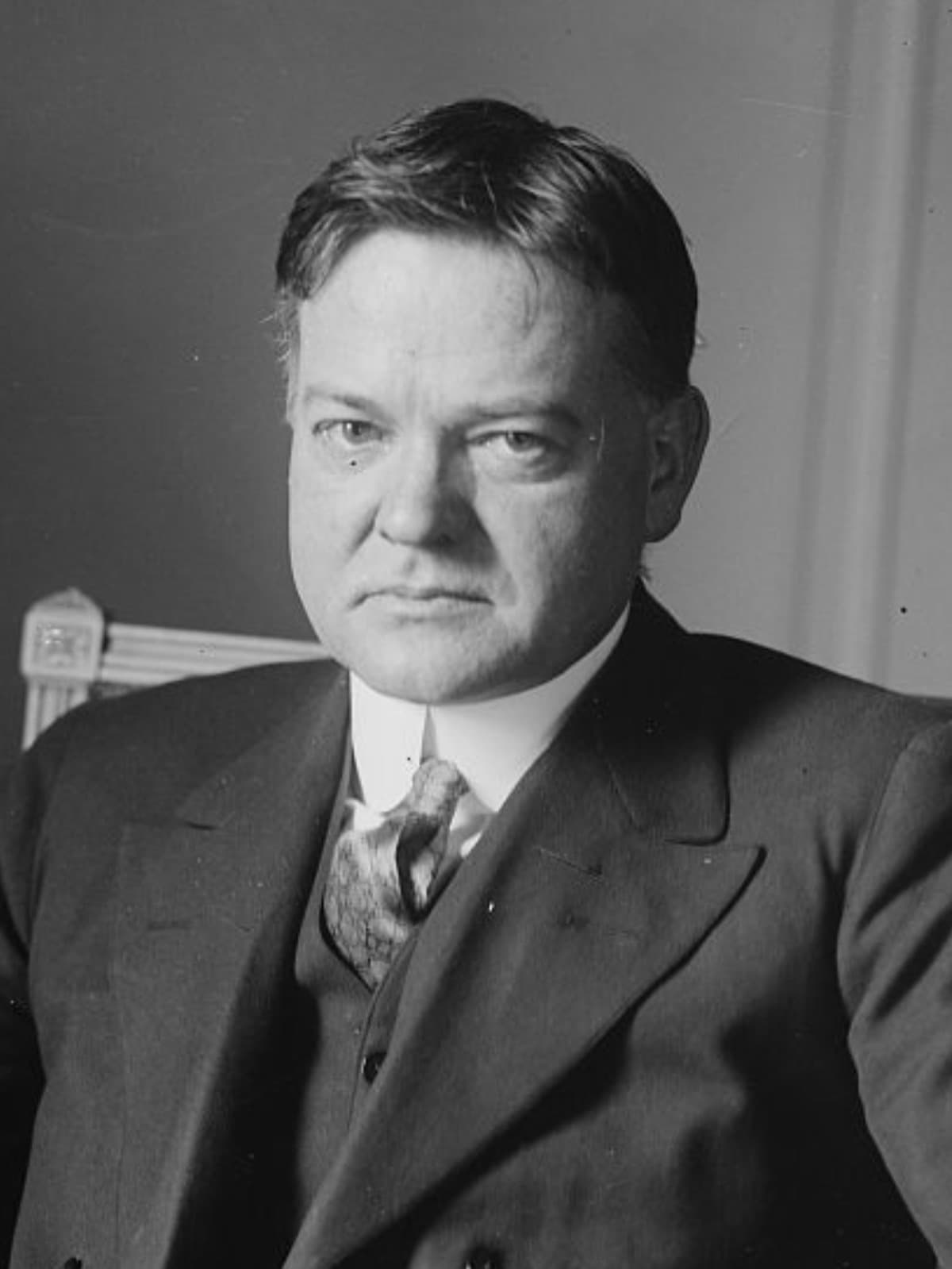
He learned to run hard enterprises in hard places
The Hoover relevant here is the engineer who left Stanford in 1895 and built a global career before national politics ever entered the picture. After early work in California, he went to Western Australia in 1897 for the London mining firm Bewick, Moreing & Co., where he examined mines, installed equipment, cut costs, and learned what enterprise looks like when geography, labor scarcity, and distance punish every mistake.[1] In 1899 he moved into mining work in China; after the Boxer crisis and the reorganization of the Chinese mining business, Bewick, Moreing offered him a junior partnership, and he shifted to London in 1901.[2] There he spent years traveling from problem site to problem site across several continents, acquiring the nickname "doctor of sick mines."
That phrase captures his real specialty. Hoover was not mainly a prospector or a charismatic promoter but a reorganizer of struggling enterprises, working at the point where geology, machinery, labor, finance, and ownership structure all had to be made to cohere. After leaving Bewick, Moreing in 1908, he continued as an independent consultant and investor, turning technical judgment into a transnational business career.[3] The later public organizer was built on this earlier private apprenticeship.
He gave enterprise a moral vocabulary instead of a shrug
Hoover belongs in the canon because doctrine needs more than competent operators. It needs operators who can explain the order they are trying to strengthen. Hoover could do both. His engineering career taught him how fragile enterprises fail, how capital misreads risk, and how thin legal promises become when organization is weak. His public writing then gave those practical lessons a philosophical frame. In American Individualism, Hoover rejected the old caricature of freedom as indifference. "In our individualism," he wrote, "we have long since abandoned the laissez faire of the 18th Century."[4] That line is more useful than many later summaries of American capitalism because it refuses both passivity and regimentation.
For the doctrine, this is a major inheritance. Hoover showed that private capability can be morally serious without becoming statist. He was comfortable with profit, competition, and technical excellence, but he insisted on social obligation, equal opportunity, and disciplined institutions. That makes him a model for the entrepreneur-diplomat type the doctrine needs: not a theorist who borrows the language of business, but a builder whose theory was earned under operating strain.
This profile keeps the engineer and brackets the president
The bracketing is deliberate. Hoover's presidency during the Depression is so dominant in public memory, and so heavily contested, that it can flatten the earlier figure into caricature. The canon does not need that argument here. It needs the engineer-organizer-philosopher who existed before electoral office.
Even then, the earlier Hoover should not be polished into innocence. His mining career unfolded inside foreign concession systems, labor conflict, and the racial hierarchies of the age, especially in Australia and China.[5] He could write about Chinese labor in terms no serious modern doctrine would tolerate, and his business world was not free from the coercions of empire. Those facts do not remove him from the canon. They simply establish that the usable lesson is moral seriousness joined to operating ability, not moral purity.
The doctrine takes the demand for competence with conscience
Hoover's lesson for the doctrine is that builders need a philosophy of order, not just a spreadsheet and an appetite for arbitrage. Strategic enterprise abroad requires people who can raise capital, diagnose institutional weakness, reorganize failing systems, and still speak clearly about why free societies need law, fairness, and obligation. The engineer without the philosophy goes brittle. The philosopher without the engineering becomes decorative.
That is why the pre-presidential Hoover remains in the canon. He shows that private capability can be intellectually serious and publicly minded without collapsing into bureaucratic command. The doctrine does not take his later presidency as a blueprint. It takes the earlier standard: technical competence, institutional realism, and a refusal to treat liberty as an alibi for neglect.
Sources
George H. Nash, The Life of Herbert Hoover: The Engineer, 1874–1914 (W. W. Norton, 1983), 44–72. Nash is the authoritative biographer on Hoover's Western Australia years with Bewick, Moreing.
Nash, The Life of Herbert Hoover: The Engineer, 90–138. Nash covers the Kaiping mines, the Boxer Uprising, and Hoover's path to a junior partnership in detail.
Nash, The Life of Herbert Hoover: The Engineer, 400–430. Nash documents Hoover's departure from Bewick, Moreing in 1908 and his subsequent independent consulting and investment career, including the origin of the "doctor of sick mines" description.
Herbert Hoover, American Individualism (Doubleday, Page & Company, 1922), 9. The passage is on the opening pages of Hoover's argument against laissez-faire indifference.
Nash, The Life of Herbert Hoover: The Engineer, 155–164. Nash discusses Hoover's treatment of Chinese labor at the Kaiping mines and places it in the context of the racial and imperial hierarchies of the era.